Plant It and Profit: Which Edible Perennials Are Worth Every Penny (And Which Will Drain Your Wallet)
Every gardening article on the internet will tell you that perennial edibles are a brilliant investment. Plant once, harvest forever — sounds like a no-brainer, right? But here's the thing: not all perennial food plants are created equal. Some will genuinely save you hundreds of dollars over the years. Others will eat up your budget, your space, and your patience without ever delivering a real return.
At GardenSave, we're all about helping you stretch every gardening dollar further. So we dug into the actual numbers — upfront costs, maintenance expenses, realistic yields, and grocery store equivalents — to figure out which edible perennials are worth planting and which ones are more trouble than they're worth.
The Real Cost of "Plant Once, Harvest Forever"
Before we get into specific crops, let's talk about how to actually measure ROI on a perennial plant. It's not just about what you spend at the nursery. You need to factor in:
- Initial plant cost (crowns, bare-root plants, or seedlings)
- Soil prep and amendments (some perennials are picky)
- Annual maintenance (fertilizer, mulch, pruning)
- Time to first meaningful harvest
- Expected productive lifespan
- Grocery store replacement value of your yield
With that framework in mind, here's how the most popular edible perennials actually stack up.
Asparagus: The Long Game Champion
Asparagus is the poster child for perennial patience — and for good reason. You're looking at a 2-3 year wait before your first real harvest, and that's a hard sell for impatient gardeners. But here's where the math gets interesting.
A bundle of asparagus at the grocery store runs anywhere from $3.50 to $6.00 depending on your region and the season. Organic? Add another couple bucks. A 25-crown planting (which costs roughly $20-$35 depending on variety and source) can produce 7-10 pounds of spears annually once it hits full stride around year three or four — and it'll keep doing that for 15 to 20 years with minimal fuss.
The 20-year math: Spend $35 upfront plus maybe $10/year in compost and mulch. That's roughly $235 over 20 years. Your yield? Potentially 100+ pounds of asparagus at a grocery value of $400-$600+. Verdict: One of the best ROI perennials you can plant.
The catch is space — asparagus beds take up real estate and shouldn't be disturbed. If you're working with a small yard, plan carefully before committing.
Rhubarb: Cheap, Easy, and Wildly Underrated
Rhubarb might be the most underappreciated budget perennial out there. A single crown costs $5-$12 at most garden centers, and within two seasons you'll be dividing it and giving starts to your neighbors. It asks for almost nothing — a little compost in spring, a good drink of water during dry spells, and you're done.
The grocery store value of rhubarb is tricky to calculate since most people don't buy it regularly, but specialty markets charge $3-$5 per pound. A mature rhubarb plant produces 3-6 pounds per season, and it'll live for decades.
The 10-year math: Maybe $15 total investment, including soil prep. Potential yield value: $90-$300 depending on how much you use or trade. Verdict: Excellent ROI, especially for bakers and jam-makers. Skip it if you don't actually like the stuff.
Berry Bushes: Big Upside, Bigger Variance
This is where things get more complicated, because "berry bushes" covers a huge range of plants with very different cost profiles.
Blueberries are expensive to get started. A single named-variety plant runs $15-$30, and you typically need at least two for cross-pollination. They also require acidic soil (pH 4.5-5.5), which often means buying sulfur amendments or peat moss. First real harvest takes 3-4 years. But — and this is a big but — organic blueberries cost $4-$7 per pint at the store. A mature blueberry bush can produce 5-10 pints annually for 20+ years.
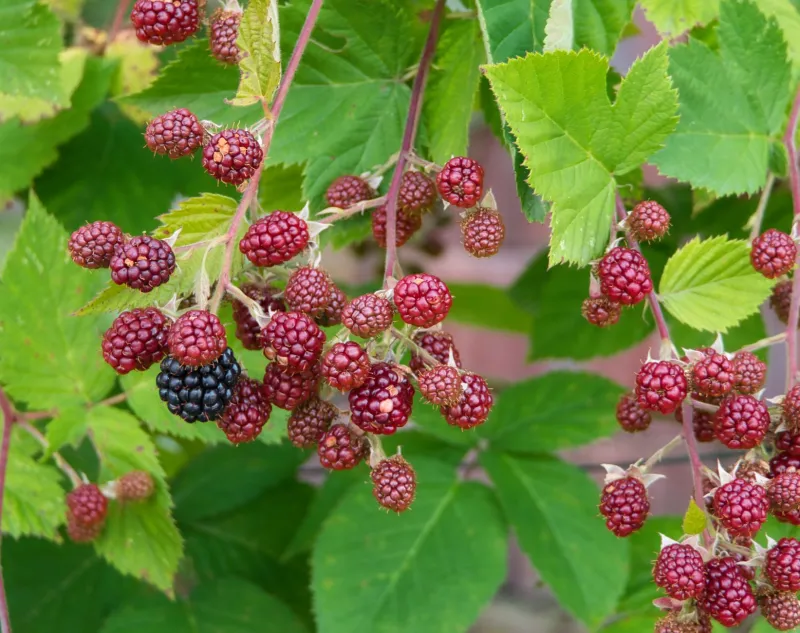
Raspberries and blackberries are a different story. Bare-root canes often sell for under $5 each, they spread aggressively (almost too aggressively), and you'll get fruit within the first or second year. At $3-$5 per half-pint for fresh berries at the store, even a modest patch pays off fast. Raspberries are arguably the best short-term ROI berry you can plant.
Strawberries technically qualify as perennials but need replanting every 3-4 years in most climates. Factor that into your cost projections.
Verdict on berries: Raspberries and blackberries win on ROI. Blueberries win on long-term value but require patience and soil investment. Choose based on your climate zone and how much you're willing to spend upfront.
Nut Trees: The 20-Year Moonshot
Let's be honest with you here: nut trees are not a budget gardening move for most homeowners. A grafted pecan or hazelnut tree can cost $30-$80 or more, they take years to produce meaningfully, and they eventually grow large enough to reshape your entire yard.
Hazelnuts are the exception worth considering. They're shrub-sized, relatively affordable ($15-$25 per plant), produce within 3-5 years, and hazelnuts at the grocery store aren't cheap. For gardeners in the Pacific Northwest or similar climates, they're a solid long-term play.
Pecans and walnuts? Unless you're planting for your grandkids, the ROI timeline doesn't make much sense for most backyard gardeners. Verdict: Skip nut trees unless you have serious space, a long time horizon, and a climate that genuinely suits them.
Herbs: The Quiet Winners Nobody Talks About
If we're being real about dollar-for-dollar value, perennial herbs beat almost everything else on this list. Chives, oregano, thyme, sage, mint, and lovage cost $3-$6 per plant, produce almost immediately, and replace grocery store herbs that routinely cost $2-$4 per tiny clamshell package.
A single established thyme plant can replace dozens of those overpriced herb packages per season. Multiply that across a small herb bed and you're saving $50-$150 a year on something that takes up almost no space.
Verdict: Perennial herbs are the highest ROI plants per square foot in almost any garden. Start here if you're budget-focused.
A Simple Decision Framework
Before you buy anything, run through these questions:
- Do I actually eat this food regularly? An asparagus bed is worthless if your family won't touch it.
- What's my climate zone? Blueberries struggle in alkaline soil regions. Pecans need long, hot summers. Match the plant to your reality.
- How much space can I commit permanently? Perennials aren't movable. Be honest about what you can dedicate.
- What's my payback timeline tolerance? If you need returns within two years, lean toward raspberries and herbs. If you're thinking decade-long, asparagus and blueberries shine.
- What does that food actually cost at my local store? The higher the grocery price, the faster your payback.
The Bottom Line
The best edible perennials for most US backyard gardeners — ranked purely on budget ROI — are perennial herbs first, raspberries and blackberries second, asparagus third, and rhubarb fourth. Blueberries are excellent if you can handle the upfront soil investment. Everything else requires serious thought before you commit.
The garden trap to avoid? Buying expensive, trendy perennial edibles just because someone on YouTube made them look easy. Do the math for your specific situation, your climate, and your grocery habits — and you'll make planting decisions you won't regret five years from now.