Pennies Per Seed: Why Savvy Gardeners Skip the Garden Center Packets and Buy in Bulk
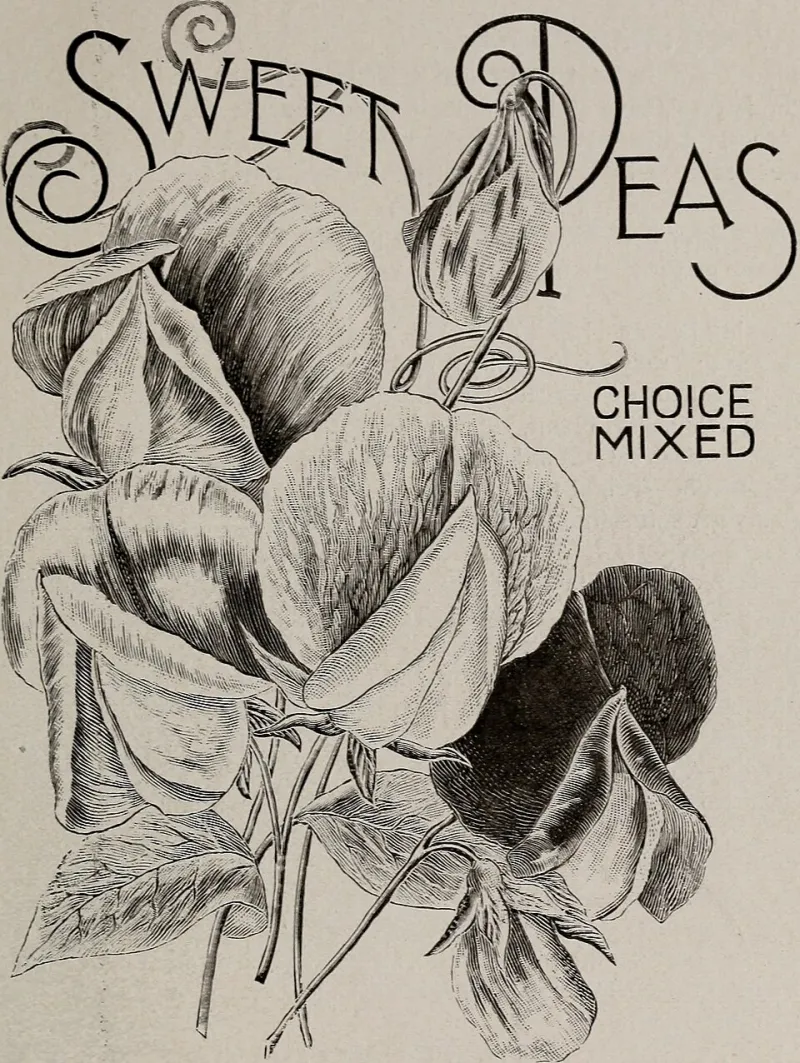
Photo: Internet Archive Book Images, No restrictions, via Wikimedia Commons
Walk into any garden center in March and you'll find a spinning rack of seed packets, each priced somewhere between $3 and $6. They've got cheerful illustrations, bold variety names, and planting instructions right on the back. They're convenient. They're accessible. And if you're growing a serious home garden, they might be quietly draining your wallet more than you realize.
Let's run the numbers.
The Real Cost of Those Cute Little Packets
A standard retail seed packet typically contains anywhere from 20 to 50 seeds, depending on the variety. For something like tomatoes or peppers, you might get as few as 15 to 25 seeds per packet — and you're paying $4 or $5 for the privilege.
Do the math: that works out to roughly 15 to 25 cents per seed. For a vegetable you can grow from a $0.002 seed.
Now consider what happens when you buy in bulk. A one-ounce bag of, say, Black Krim tomato seeds from a reputable bulk supplier typically contains somewhere around 3,000 seeds and sells for $10 to $20 depending on the source. That's less than a penny per seed — often a fraction of a penny. Even if you're buying in smaller bulk quantities — a quarter ounce, or a 500-count packet — the per-seed price is still dramatically lower than what you'd pay at a big box store or garden center.
For crops you plant heavily — lettuce, radishes, carrots, beans, kale — the savings get even more dramatic. Gardeners who make the switch to bulk buying often cut their annual seed spending by 70 to 85 percent without changing a single thing about what they're growing.
Where to Actually Buy Bulk Seeds (Without Getting Burned)
The bulk seed market isn't as mysterious as it might sound, but it does require a little homework. Not every supplier is created equal, and seed quality — germination rates, variety accuracy, freshness — varies more than you'd think.
A few places worth knowing about:
Specialty seed companies like Johnny's Selected Seeds, True Leaf Market, and Botanical Interests all offer bulk options for home gardeners, not just commercial growers. True Leaf Market in particular has become a favorite among budget-conscious home growers for its wide selection and competitive bulk pricing.
Online marketplaces can be hit or miss. If you're buying from a third-party seller on Amazon or eBay, check reviews carefully and look for sellers who list germination rates and harvest dates. A cheap seed lot that's three years old isn't a deal — it's a disappointment waiting to happen.
Regional seed companies are often underrated. Many states have small, family-run seed businesses that specialize in varieties suited to local growing conditions. Because their overhead is lower than national brands, their bulk prices are often excellent, and their seeds frequently outperform generic options in your specific climate.
USDA-certified organic suppliers are worth the slight premium if you're growing organically. Territorial Seed Company and High Mowing Organic Seeds are two well-regarded options with solid bulk offerings.
Seed Swaps and Heirloom Libraries: The Closest Thing to Free Seeds
If bulk buying is the budget option, seed swaps and seed libraries are the free option — and they're more accessible than most gardeners realize.
Seed libraries operate similarly to book libraries: you check out seeds, grow the plants, save some seeds at the end of the season, and return them for the next person. Many public libraries across the US now host seed libraries, especially in communities with active gardening cultures. A quick search for "seed library [your city or county]" will often turn up something nearby.
Seed swaps — both in-person events and online communities — let you trade varieties with other gardeners. If you grew a bumper crop of Dragon Tongue beans and saved seeds, you can swap them for varieties you've never tried. Facebook groups, Reddit's r/SeedSwap community, and local gardening clubs are all good places to find active swaps.
Beyond the obvious cost savings, seed swaps give you access to heirloom and open-pollinated varieties you simply won't find at a garden center. Rare tomatoes, unusual pepper types, regional bean varieties that have been grown in a specific part of the country for generations — these are the kinds of seeds that travel through swap networks and libraries, not retail racks.
Storing Your Seeds So They Actually Last
Here's where a lot of bulk buyers trip up. You buy 500 tomato seeds for $8, use 30 of them, and then toss the rest because you're not sure if they're still good next spring. That defeats the whole purpose.
Seeds last longer than most people think — if you store them correctly. The enemies of seed viability are heat, moisture, and light. The friends of seed viability are cool temperatures, low humidity, and darkness.
A glass jar with a tight-fitting lid, stored in a cool cabinet or the back of a refrigerator, will keep most vegetable seeds viable for two to five years, sometimes longer. Toss a small silica gel packet into the jar to absorb any residual moisture. Label everything with the variety name and the year you bought or saved them — this is non-negotiable if you're managing any kind of seed inventory.
Some seeds are more forgiving than others. Onions and parsnips have shorter viability windows (one to two years). Tomatoes, cucumbers, and squash can stay viable for five or more years under good storage conditions. Knowing this helps you prioritize what to use up first.
The Quick Viability Test You Should Be Running Every Spring
Before you commit a whole bed to seeds that might not sprout, run a simple germination test. Lay 10 seeds between two damp paper towels, fold it up, and seal it in a plastic bag. Keep it somewhere warm — on top of the refrigerator works great — and check it after the expected germination window for that crop (usually five to ten days).
Count how many sprouted. If eight out of ten germinate, you've got 80% germination — totally usable. If only four or five germinate, you'll want to plant more densely to compensate. If fewer than three sprout, it's probably time to replace that batch.
This five-minute test can save you from replanting an entire bed in June because your seeds were duds.
Building Your Seed Inventory Over Time
The real payoff of bulk buying isn't just the savings in year one — it's the compound effect over multiple seasons. When you buy 500 tomato seeds for $10 and use 40 of them per year, you've got more than a decade of tomatoes covered. Add in seeds saved from your own best plants each fall, and your ongoing seed costs can drop close to zero for established varieties.
Start with the crops you grow every year without fail. Buy those in bulk first, get your storage system sorted out, and expand from there. Within two or three seasons, you'll have a seed collection that would cost hundreds of dollars to replicate at retail prices — and you'll have paid almost nothing to build it.
That's the kind of long-game thinking that separates gardeners who spend a lot from gardeners who grow a lot. And at GardenSave, that's exactly the kind of approach we're here to support.