Ditch the $50 Planter: Everyday Household Items That Make Surprisingly Great Garden Containers
Walk into any garden center this spring and you'll find rows of decorative pots priced anywhere from $20 to well over $100 a pop. They look great, sure — but here's the honest truth: your tomatoes, herbs, and flowers don't care what their container looks like. What they care about is soil, drainage, and enough room to grow. And you can deliver all three without pulling out your credit card.
Repurposing household items as garden containers isn't just a budget hack — it's genuinely smart gardening. You're keeping stuff out of the landfill, customizing sizes to fit your space, and often ending up with containers that are more functional than the overpriced alternatives. Let's dig into what works, what to watch out for, and how to make your repurposed planters look intentional rather than accidental.
Why Store-Bought Pots Are Overrated
That $45 glazed ceramic pot at the garden center is gorgeous, no question. But it's also heavy, prone to cracking in a freeze, and not a single bit more effective at growing basil than a five-gallon bucket from the hardware store (which runs about $4). The math just doesn't add up — especially if you're container gardening at any real scale.
The core requirements for any plant container are simple:
- Enough volume for the root system
- Drainage holes so water doesn't pool
- A material that won't leach toxins into edible plants
That's it. Once you internalize that, you start seeing planters everywhere.
The Household Items That Actually Work
5-Gallon Buckets This is the workhorse of the repurposed container world, and for good reason. Five-gallon buckets are ideal for tomatoes, peppers, cucumbers, and most larger vegetables. Drill five or six holes in the bottom with a standard drill bit, fill with a quality potting mix, and you're in business. Food-grade buckets (the kind used for pickles, frosting, or bulk goods at restaurant supply stores) are your safest bet for edibles. Many bakeries and delis will hand these over for free if you just ask.
Laundry Baskets and Fabric Hampers This one surprises people, but it shouldn't. Fabric-style laundry hampers — especially the breathable mesh or canvas ones — function almost identically to the trendy "fabric grow bags" that sell for $15 to $25 each online. The drainage and air pruning benefits are the same. Line the inside with a layer of burlap or landscape fabric to hold the soil in, and you've got a legitimate planter for herbs, greens, or even strawberries. An old plastic laundry basket works too — the holes are already built in.
Wooden Crates and Pallets Fruit crates, wine crates, and pallet wood boxes make beautiful raised planters and look completely intentional on a patio or deck. Line them with landscape fabric to keep soil from falling through the gaps, drill a few drainage holes in the bottom board if needed, and fill away. Just be cautious with pallets: look for ones stamped "HT" (heat-treated) and avoid anything marked "MB" (methyl bromide-treated), which isn't safe for growing food.
Colanders and Metal Strainers Got an old colander that's missing its handle or just taking up cabinet space? Perfect. The built-in holes make drainage a non-issue, and a colander planter filled with trailing herbs or strawberries looks like something out of a magazine. Hang it, set it on a table, or tuck it into a corner — it works either way.
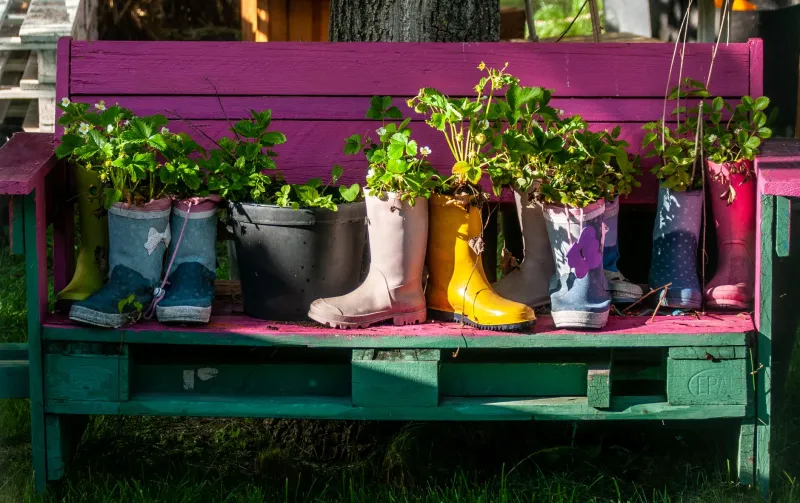
Worn-Out Rain Boots and Shoes Okay, this one leans more decorative than functional for serious food production, but for a small herb plant or a pop of color near your front door, an old rubber boot makes a genuinely charming planter. Poke a few drainage holes in the sole, add some potting mix, and tuck in a compact plant like thyme, chives, or a trailing petunia. Kids love this project, and it costs exactly nothing.
Plastic Storage Bins and Totes Those cracked or lidless plastic storage totes that aren't useful for storage anymore? Drill drainage holes and they become instant raised beds for shallow-rooted crops like lettuce, spinach, radishes, and herbs. A standard 18-gallon tote gives you a surprising amount of growing real estate. Stack two with the bottom one inverted and you've even got a little elevation to improve drainage and reduce back strain.
Solving the Drainage Problem
The single biggest mistake people make with repurposed containers is skipping drainage. Waterlogged roots are a death sentence for most plants, so whatever you're using, make sure water can escape.
For rigid containers (buckets, bins, crates), a standard drill with a 1/2-inch bit does the job fast. Aim for at least four to six holes spread across the bottom. For soft containers like canvas bags or fabric hampers, the material itself usually handles drainage well — just don't set them in saucers that trap standing water.
A layer of gravel or broken pottery shards at the bottom of your container used to be standard advice, but modern research suggests it can actually worsen drainage by creating a perched water table. Skip the gravel and just use a high-quality potting mix that drains well on its own.
Making Repurposed Containers Look Great
There's no rule that says budget containers have to look budget. A few easy tricks close the gap between "stuff I found in the garage" and "intentional garden design":
- Paint it. A coat of exterior spray paint in a consistent color palette ties mismatched containers together. Terracotta, slate gray, or matte black all look sharp.
- Group by height. Cluster containers at different elevations using upside-down pots, bricks, or wooden crates as risers. The layered look reads as deliberate.
- Add a liner. Tucking a plain bucket inside a wicker basket or wooden box gives you the aesthetic of a fancy planter with none of the cost.
- Let plants do the work. Trailing plants like sweet potato vine, nasturtiums, or creeping thyme spill over the edges and draw the eye away from the container itself.
The Real Cost Comparison
Let's be straight about the numbers. Outfitting a patio with ten container plants using store-bought pots — even modest ones at $15 to $20 each — runs you $150 to $200 before you've bought a single seed or bag of soil. Doing the same thing with repurposed household items and a can of spray paint? You're looking at maybe $10 to $20 total, mostly for paint and potting mix.
That's a savings of $130 or more — money that's better spent on quality seeds, good soil amendments, or a drip irrigation setup that actually improves your harvest.
Start Seeing Your House Differently
Once you shift your perspective, the containers are everywhere. That chipped enamel pot in the back of your cabinet. The plastic kiddie pool the kids outgrew. The wooden wine boxes from a holiday gift basket. The galvanized metal tub sitting in the garage.
None of these cost you anything. All of them can grow food or flowers just as well as anything hanging on a peg at the garden center. And honestly? There's something satisfying about a garden that reflects a little creativity and resourcefulness — not just a shopping trip.
So before you spend another dollar on containers this season, take a lap around your house first. Your best planters might already be waiting.