Thrift, Hunt, Grow: The Savvy Gardener's Playbook for Scoring Big at Garage Sales and Estate Sales
The Weekend Ritual That Serious Budget Gardeners Swear By
Every Saturday morning, while most folks are sleeping in or scrolling their phones, a certain type of gardener is already pulling on their shoes and grabbing a reusable tote. They've got a thermos of coffee, a rough mental checklist, and a very specific destination: the garage sale three streets over, the estate sale across town, and maybe a quick swing through Goodwill on the way home.
These are the gardeners who somehow have beautifully stocked tool sheds, overflowing seed collections, and raised beds built from reclaimed lumber — all for a fraction of what their neighbors spent at the garden center. Their secret isn't a special credit card or a bulk membership. It's knowing how to shop secondhand, and knowing it well.
If you've ever wondered whether that rusted trowel in a cardboard box is worth fifty cents, or whether those old seed packets on a folding table are worth anything at all, this guide is for you.
Why Garden Gear Is One of the Best Things to Buy Used
Here's something the big box stores don't want you thinking about too hard: a lot of garden tools were built to last decades. That cast iron hand cultivator sitting in someone's driveway for two bucks? It might be thirty years old and still have thirty more years in it. Unlike electronics or appliances, most basic garden tools have no moving parts, no software to update, and no proprietary batteries to replace.
Quality vintage tools — especially anything made before the mid-1990s — were often manufactured with thicker steel and heavier-duty construction than the lightweight stuff flooding shelves today. When you find them at a garage sale, you're often getting more tool for less money. That's the whole GardenSave philosophy in one Saturday morning.
What's Almost Always Worth Buying Used
Hand tools with solid construction. Trowels, cultivators, weeders, dibbers, and transplanting forks are excellent used buys. Check that the blade is solid (not cracked or severely pitted), and wiggle the handle to make sure it's not about to separate. A loose wooden handle is an easy fix — epoxy or a replacement handle costs a couple of dollars. A broken blade is a pass.
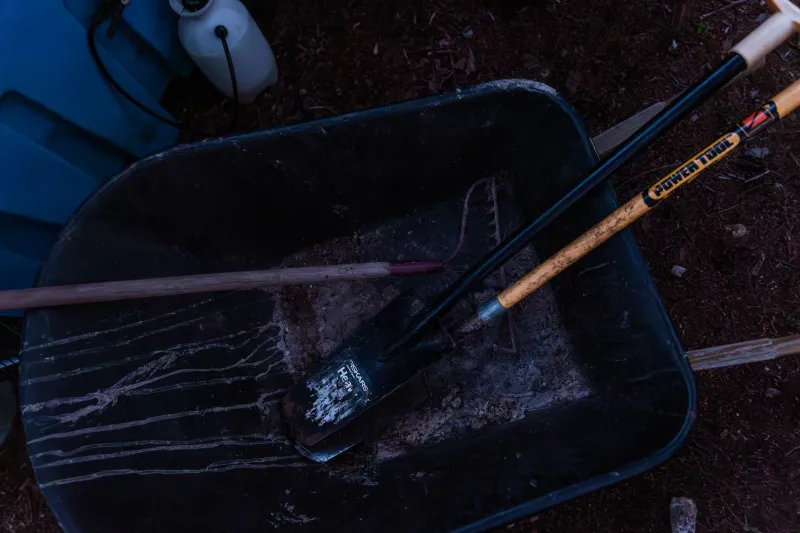
Long-handled tools like hoes, rakes, and shovels. Same principle applies. Look for a straight shaft with no deep cracks, and a head that's still firmly attached. Light surface rust is totally fine and cleans up with steel wool and a little vegetable oil. Deep rust that's eaten pits into the metal is harder to work with, but even then, some tools are still functional — just inspect the working edge.
Garden carts, wheelbarrows, and wagons. These are fantastic garage sale finds. Check the tire (or tires) — a flat is usually just a matter of adding air or swapping an inner tube for a few bucks. Look at the tray or bed for rust-through holes, which are harder to fix. A solid-bodied wheelbarrow with a flat tire for five dollars is a genuinely great deal.
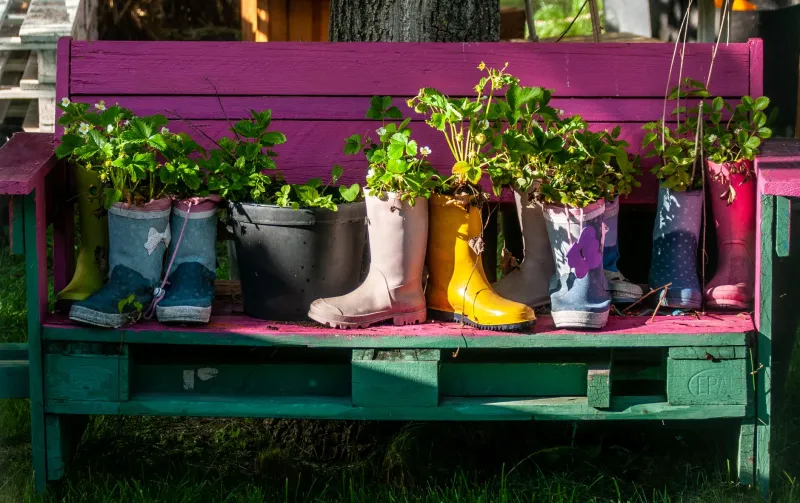
Pots, planters, and containers. Ceramic, terracotta, plastic — all worth picking up if they're structurally intact. Check for cracks that go all the way through, which can cause splitting under the weight of soil. Surface chips are purely cosmetic. A stack of used nursery pots for a dollar is basically free plant infrastructure.
Watering cans and hose nozzles. Metal watering cans last forever and look great. Test hose nozzles if you can — bring a piece of garden hose or ask if there's a spigot nearby. Cracked plastic fittings are the main thing to avoid.
Seed-starting trays and cell packs. These are almost always worth grabbing. Give them a rinse with a diluted bleach solution before use to eliminate any lingering disease pathogens, and you're good to go.
The Seed Question: Worth the Gamble?
Old seed packets are one of the most debated topics in the budget gardening world. Here's the honest answer: it depends, and you can actually test before you commit.
If you find seed packets that are unopened, stored in a cool dry place (an old tin box, a drawer, a garage cabinet), and aren't more than two or three years past their pack date, they're often worth a small gamble — especially if the price is basically nothing. Germination rates do drop over time, but many seeds remain viable for three to five years or longer under good conditions.
If someone's offering a whole shoebox of seed packets for a dollar or two, that's worth buying just to do a germination test at home. Place ten seeds between damp paper towels in a warm spot, wait the number of days listed on the packet, and count how many sprout. Even a 50% germination rate just means planting twice as many seeds per cell — totally workable.
Heirloom and open-pollinated varieties from reputable sources tend to hold viability longer than cheap hybrid packets. If you spot a collection of Baker Creek, Seed Savers Exchange, or similar packets at a sale, those are especially worth considering.
Skip seeds that: are stored in damp or sun-damaged packets, smell musty or moldy, or are very old allium family seeds (onions, leeks) — those lose viability faster than almost anything else.
Things to Leave on the Folding Table
Not everything at a garage sale is a hidden gem. A few categories are worth skipping:
Battery-powered or electric tools without testing. Cordless drills, electric cultivators, battery-powered sprayers — if you can't plug them in or charge them up on the spot, the risk is high. Dead batteries for older tool brands can cost more than a new tool.
Sprayers with unknown history. A pump sprayer that was used for herbicides shouldn't go anywhere near your vegetable garden, even after cleaning. Unless the seller can tell you exactly what was in it, pass.
Broken plastic pieces. Cracked plastic hose connectors, snapped plant label stakes, busted cold frame hinges — these are rarely worth the effort. Plastic doesn't repair cleanly and replacement parts are often hard to find.
Mystery soil amendments or unlabeled chemicals. If it's in an old container with a faded label or no label at all, don't bring it home. Not worth the guesswork.
Pro Tips for Working the Sale Circuit
Show up early for the best selection — serious pickers know that the good stuff goes in the first hour. But show up late for the best prices. Sellers who've been sitting there all day often slash prices dramatically in the final thirty minutes rather than haul everything back inside.
Estate sales are frequently even better than garage sales for garden tools, because older homeowners often accumulated decades' worth of quality equipment. Check local estate sale listing sites (EstateSales.net is a good one) to scout ahead.
Always bring cash in small bills. It makes negotiating easier and speeds things up at busy sales. And don't be shy about making an offer — most sellers would rather take seventy-five cents for something than pack it back up.
The Big Picture: What This Habit Actually Saves You
A decent new garden fork runs $30 to $60 at a hardware store. A quality used one at an estate sale might cost two dollars. A new wheelbarrow is $80 to $150; a used one in solid shape could be five to fifteen. Multiply that across a full tool shed, and you're looking at hundreds of dollars saved over a single season of smart secondhand shopping.
That's real money — money that can go toward better seeds, soil amendments, or just staying in your pocket where it belongs. The garage sale garden haul isn't just a fun weekend hobby. For budget-conscious growers, it's one of the most effective strategies in the whole playbook.